Anthropic's priciest model redesigned one of my websites. At list price it would have run about $1,100 in tokens. I paid none of it, because it was briefly free on the plan I already have.
I only know the number because a fellow builder, Senko Rašić, asked. "Just in time before they pulled it away! Do you have an estimate token cost for this on Fable?" I didn't know, so I asked Claude Code to count it.
In June, Anthropic put Fable 5 free on the flat Claude Max plan, meant to run for two weeks. Fable is their best model, and priced to match: $10 per million input tokens, $50 per million output, exactly double Opus 4.8. At Anthropic's API pricing, claude-fable-5 is what you reach for when you want the best and you have a budget for it. I got a few days with it.
You don't leave a supercar in the driveway during the free-rental window.
A redesign and a build from scratch
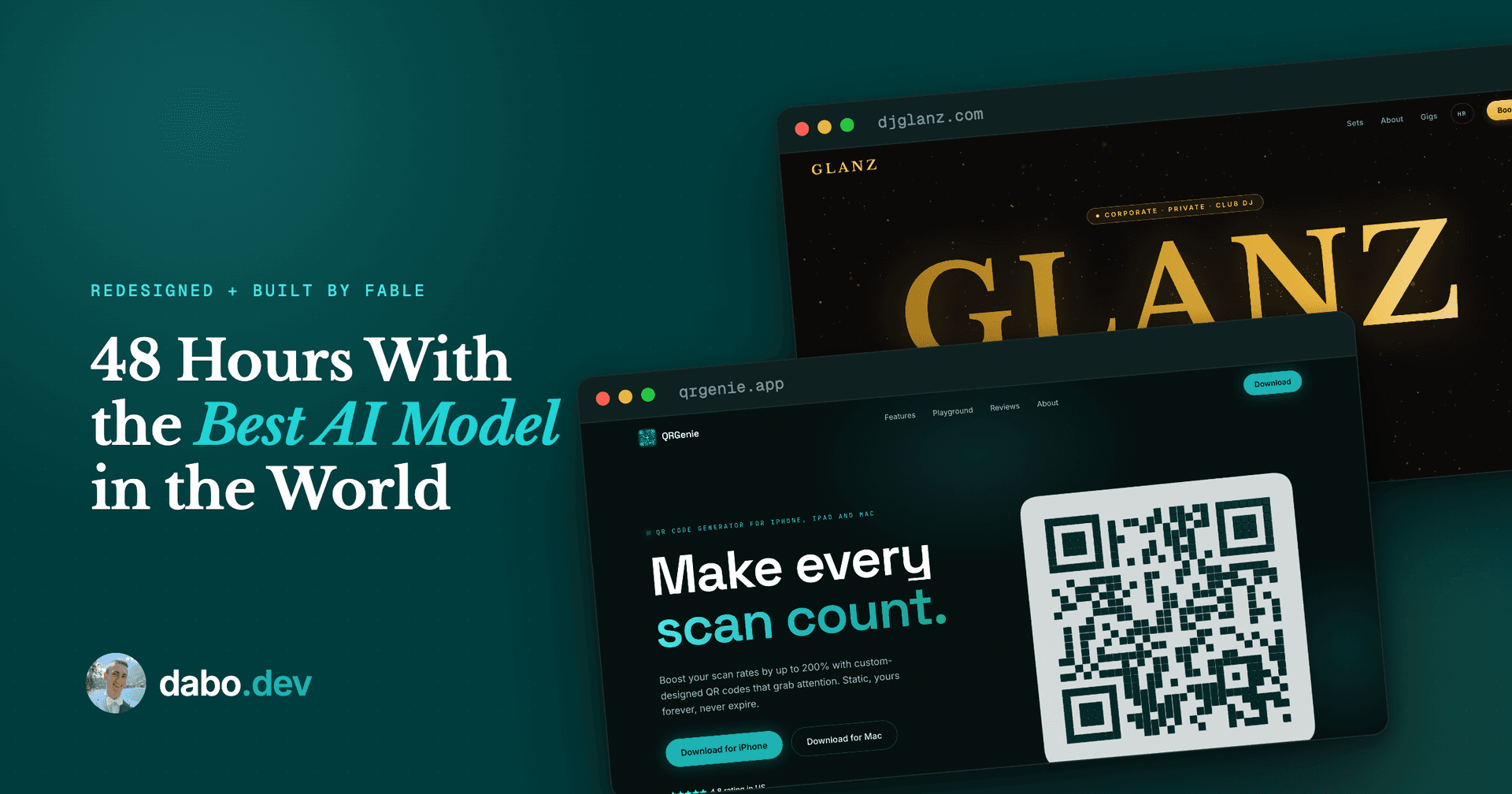
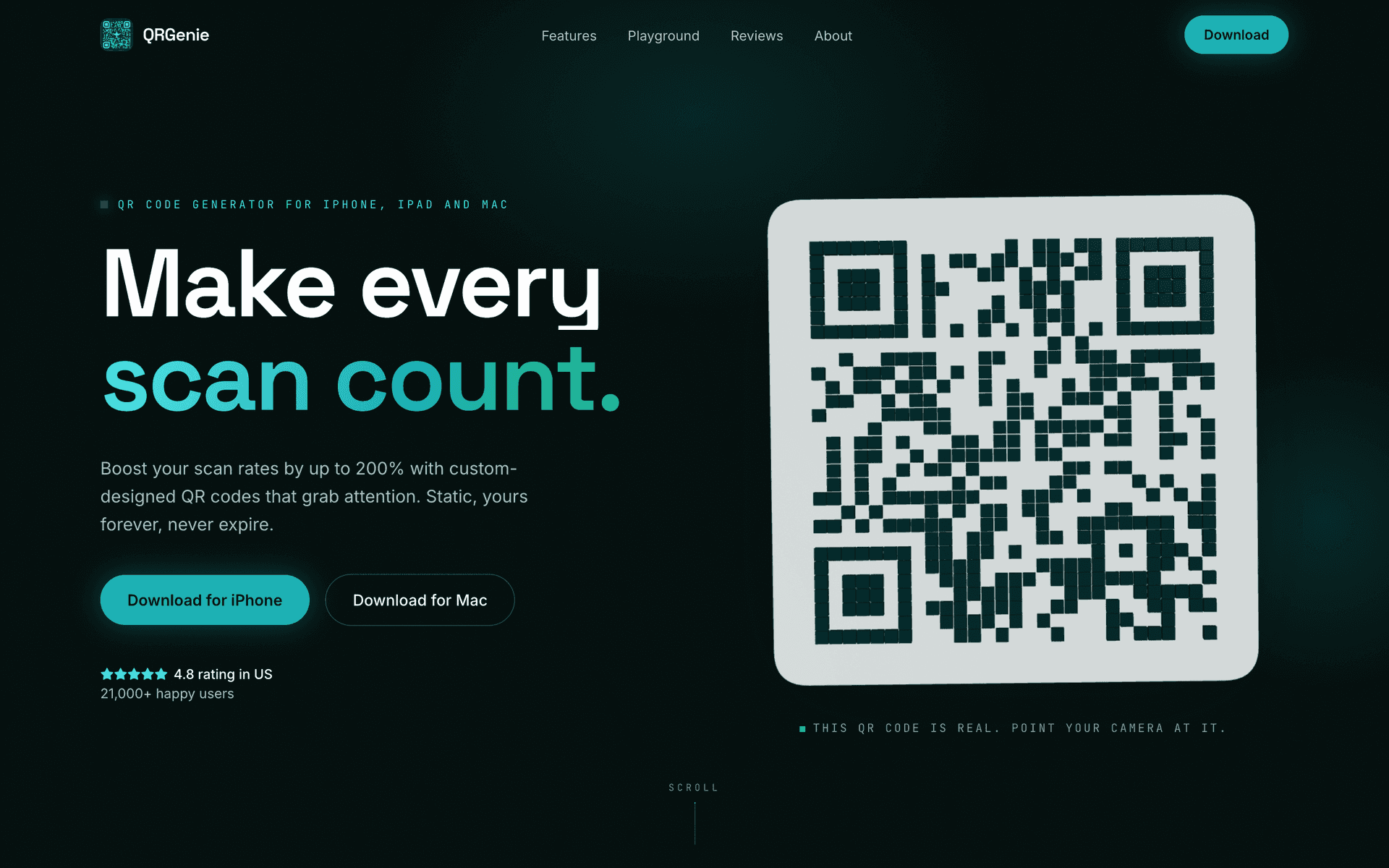
So I pointed it at the most token-hungry job I had, not a demo or a toy prompt but a ground-up redesign of QRGenie, one of my actual products, the kind with a 3D animated hero, WebGL, GSAP scroll work, the full Awwwards-grade treatment. The landing page Fable built renders a QR code as an animated 3D sculpture that actually scans to the site. When I tested it, it was janky in Safari only. Fable traced that to the smooth-scroll library fighting the WebGL hero on Safari's main thread, and shipped a separate static path for Safari while keeping the full experience on Chrome.
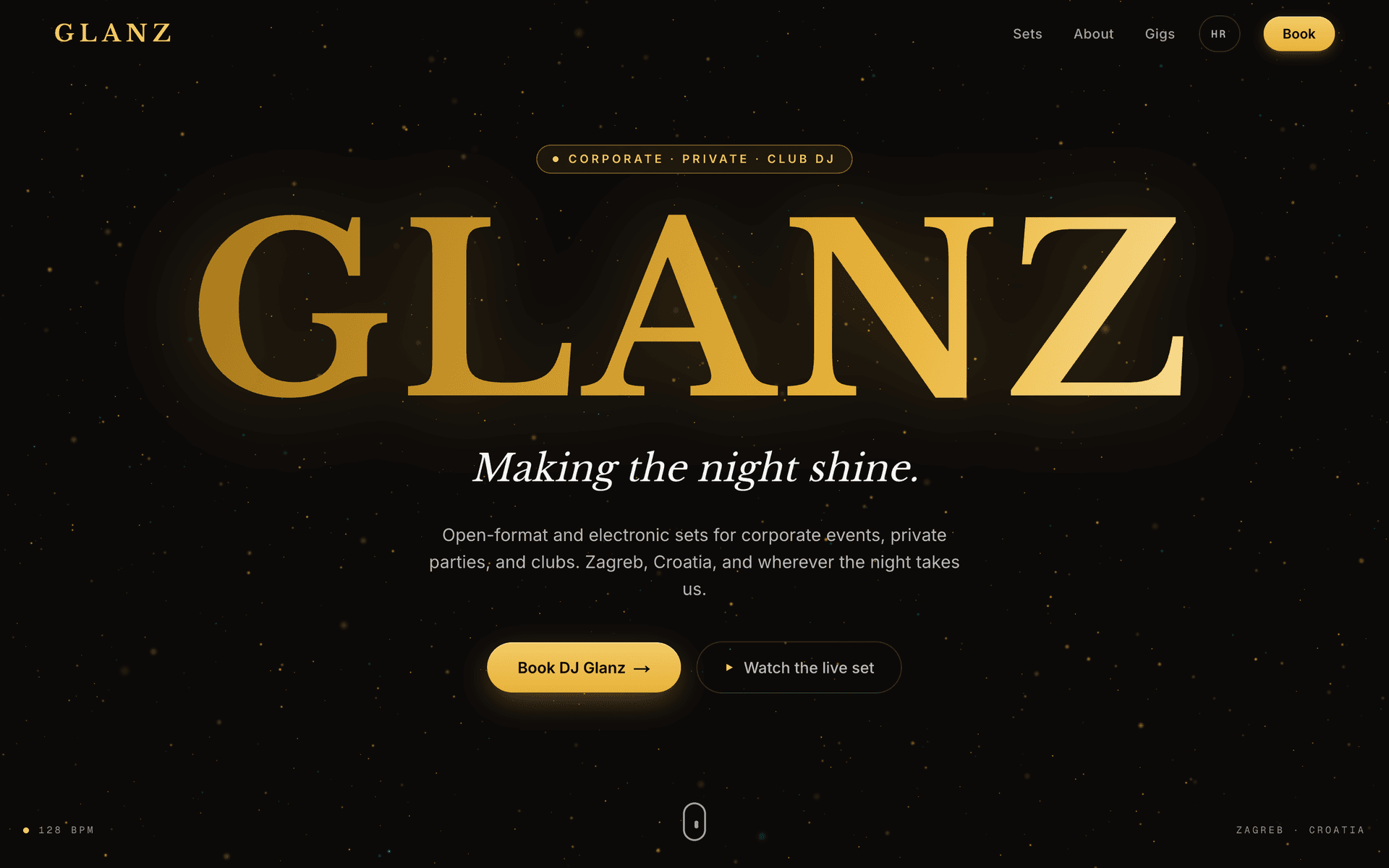
Then I did it again with djglanz.com, my DJ site, except this one didn't exist yet. There was nothing to redesign. Fable built the whole thing from scratch. Same prompt, different brand. A gold wordmark on a particle field, and the part I like most: the manifesto text lights up line by line as you scroll, because the whole brand is about light, not darkness, and Fable rendered the thesis literally. That's a senior designer's call, not a code generator's. It's the clearest sign the premium bought design judgment, not just more output.
When the QRGenie redesign went live I posted it with a dare. "I let Fable redesign my QR code app's website. The new look is mostly its work. I directed and reviewed... Judge the work yourself." That post is where Senko showed up with his question. This is the long version of that thread.
What an AI redesign actually costs
The QRGenie redesign ran in one session: about 2,087 Fable turns, 463 million tokens. At Fable's API rates that's roughly $1,113. The whole session across all models was about 1.09 billion tokens, call it $1,830 of equivalent compute. Extra cash it cost me: zero.
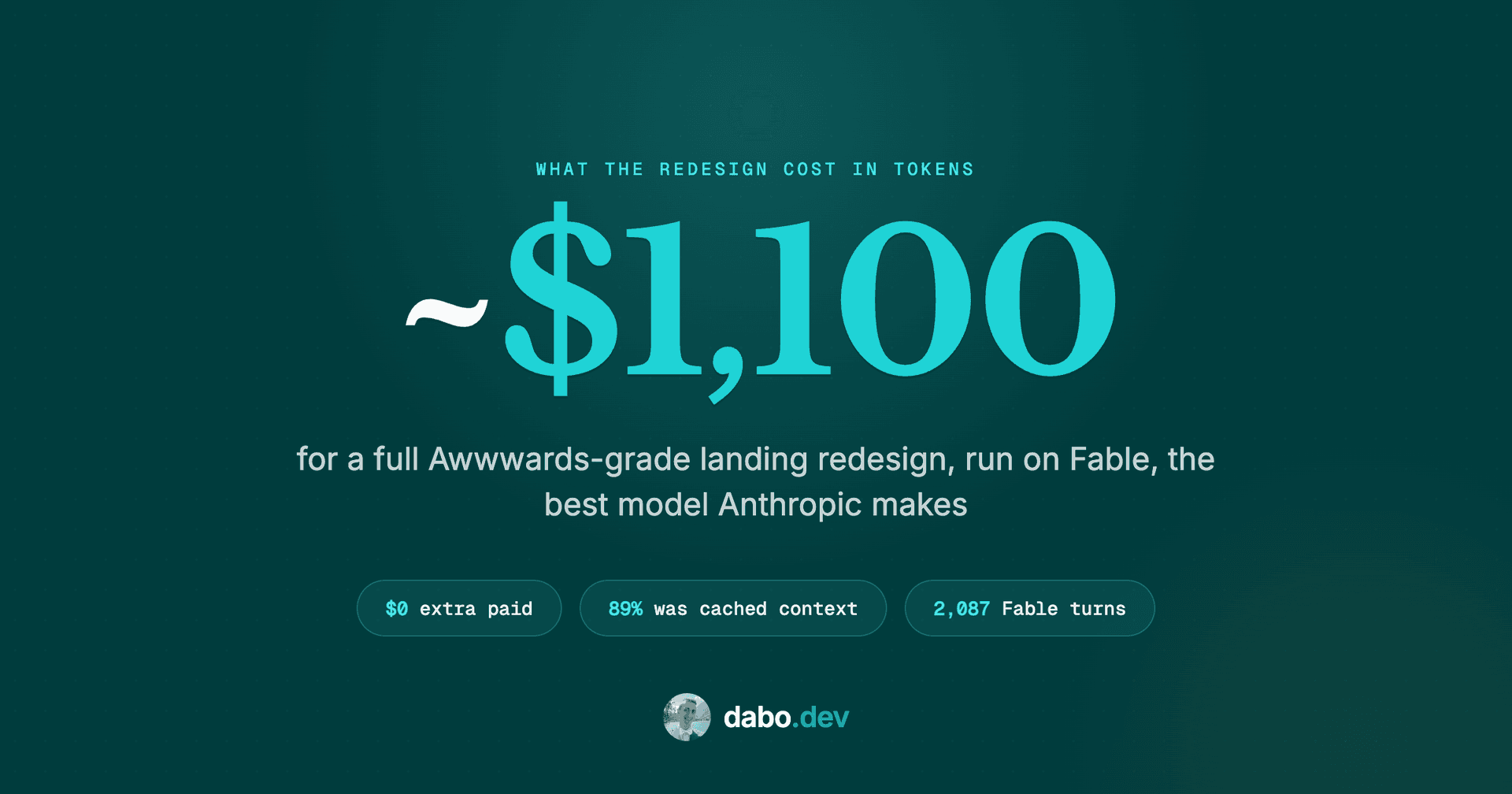
Most of that bill wasn't fresh generation. 89% of it was cache: 432 million tokens of context re-read on every turn. Uncached, the same work runs about $4,300. That's not a Fable quirk, it's just what agentic work is: every turn re-sends the context so far, so the cost is dominated by the same material read hundreds of times. It's also exactly why a flat plan and agentic work fit together. On Max, "one more turn" is free, so you take it, and you take two thousand of them. On a meter, you'd feel every one.
I wasn't the only one who clocked the price. Senko mentioned his own Fable test ran $140 for a simple, not-for-production design, a fraction of the size of mine and still real money. That's the whole reason a free window on it is worth measuring.
Then the US government switched it off
I didn't get the full window. The plan was two weeks free on Max. Three days in, on June 12, the US government issued an export-control order on national-security grounds, and Anthropic had to disable Fable, along with its sibling Mythos 5, for every customer at once. This wasn't the free window expiring. The best model in the world got switched off by the government while I was mid-project. Anthropic's statement is here.
Opus finished the job. Opus 4.8 was in the same session and actually logged more turns than Fable, 2,732 to 2,087, but the count misleads. Fable did the defining work, the design and the build, and Opus only took over once Fable went dark. The substance was Fable's, and so is that four-figure slice.
It's gone right now, with no firm date for its return. Which is the actual reason to write this down. When it comes back, this is your worked example: the priciest model you can rent, doing the design and the architecture for a full product redesign, costs somewhere around a thousand dollars in tokens. I measured that off a real session, so it's a number you can budget against instead of guessing.
What using Fable actually felt like
It felt like delegating to a senior developer, a designer, and a product owner at once, a team in one. It still needed me. This wasn't vibe coding, where you accept whatever the model hands back. I did the testing and made the calls on what was good enough to ship. The plan, the design, and the build were its work. My job was direction, QA, and polish.
Fable vs Opus
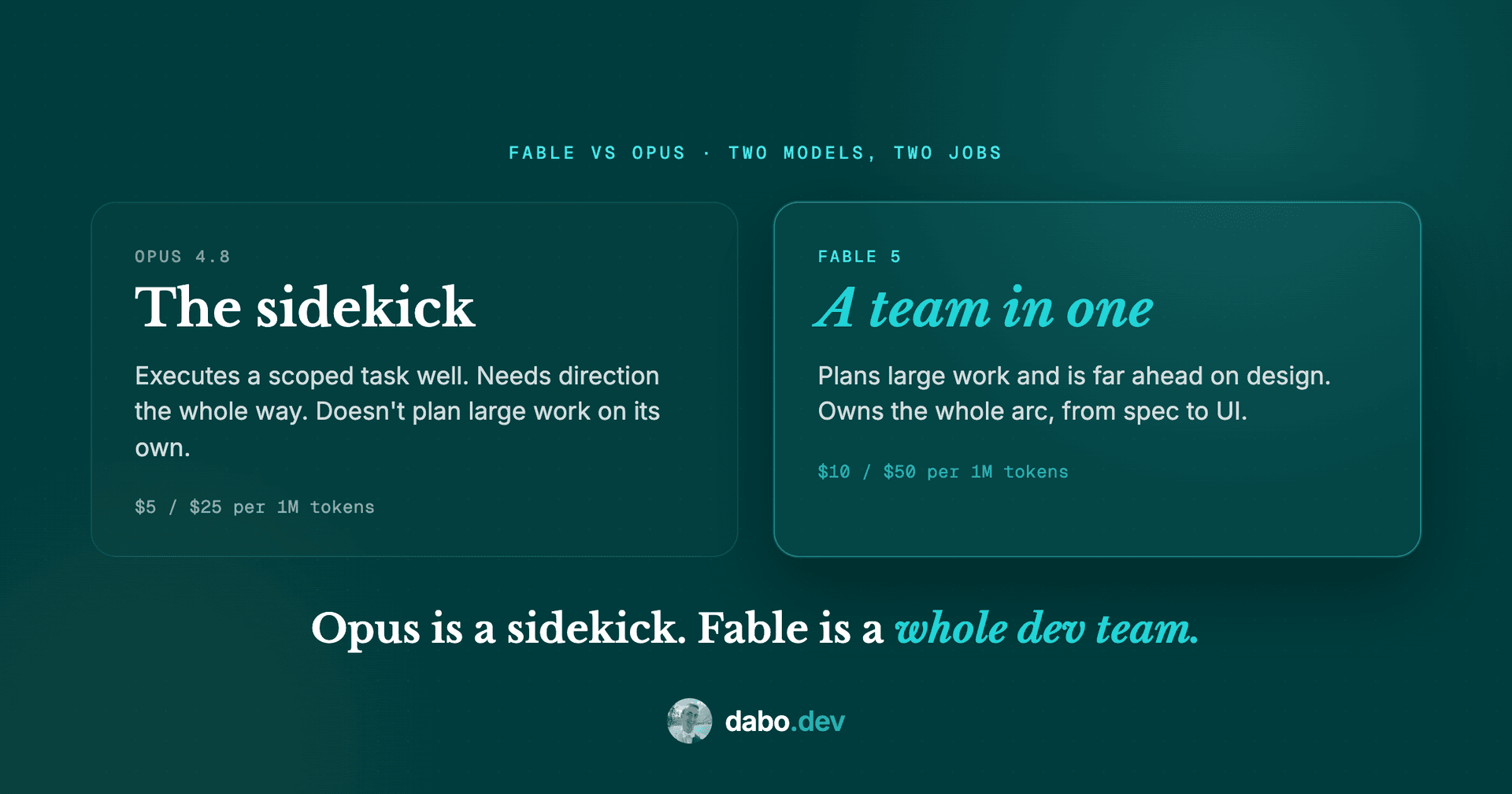
I had both running in that session, so here's the cleanest difference I can give you. Opus is great at executing a task you've scoped for it, but it leans on you the whole way and it's weak at planning large work on its own. Fable barely needed steering. It did most of the work itself, planned the large pieces, and made the design calls, where with Opus I'd have to drive every one. On design it's simply far ahead. Opus is a sidekick you guide, which is what most AI coding assistants still are. Fable is closer to a whole dev team you hand the project to.
Where this goes
When Fable comes back, here's how I'd split the work. Let it do the detailed planning, the UX, the architecture. Hand most of the execution to Opus at half the price. Bring Fable back for the UI design and a final QA pass. A team of a few can do the work of ten or more, because most of the work can be automated, which means small bootstrapped companies are about to do very well against much bigger ones.
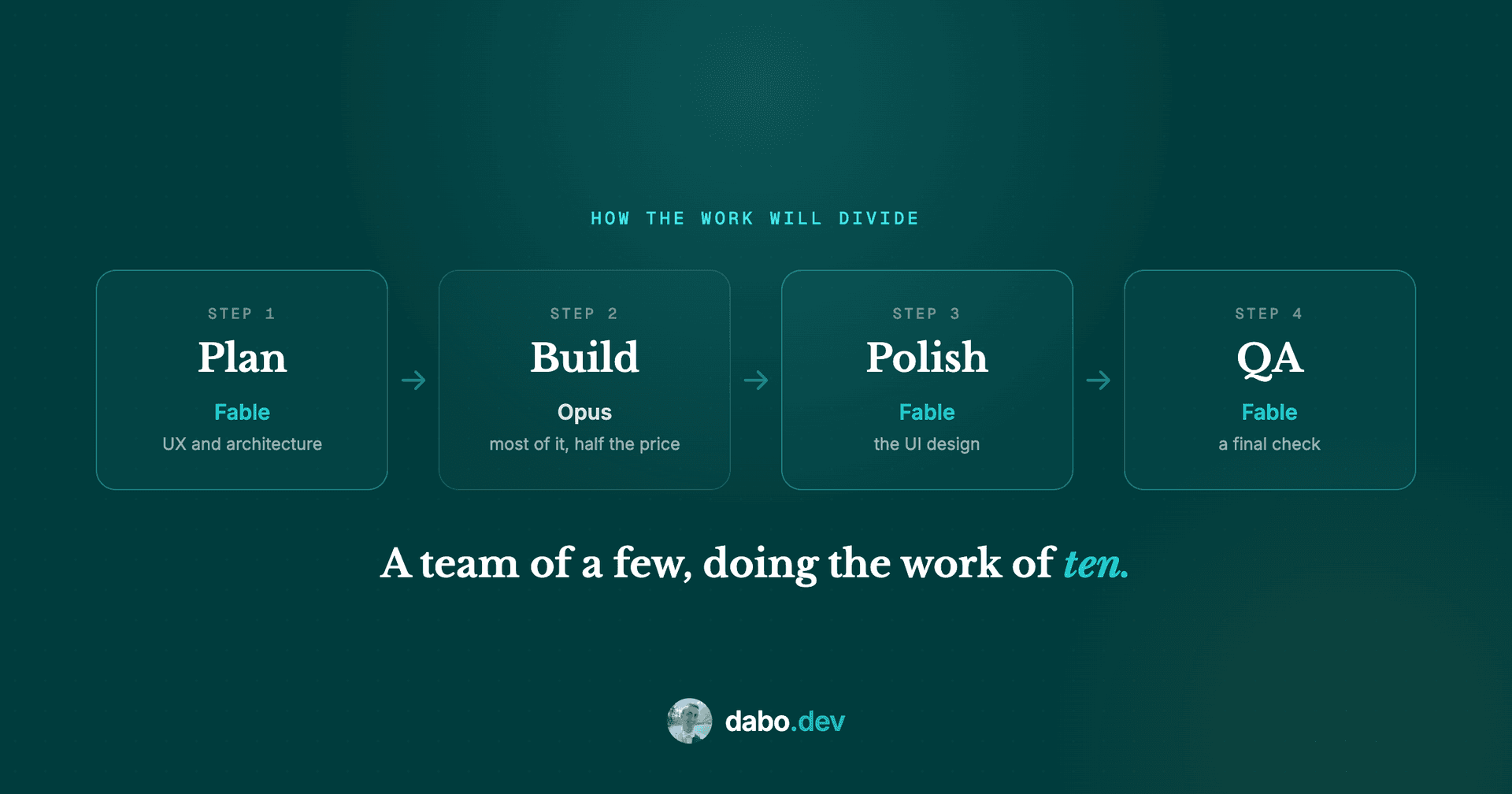
For companies of every size it becomes a real question: hire another person, or spend that budget on tokens? Where the line sits, whether one salary buys you one person's output in Fable-and-Opus credits or half of it, nobody has measured yet. It needs testing.
The part I'm most sure of: the bottleneck moved. It used to be building. Now it's deciding what to build. AI is the execution layer, the fastest and most capable one we've ever had, and it'll plan and design and build almost anything you can describe. What it can't do is want to build it. The people with the best ideas are about to ship faster than anyone in history, and the idea is still the part you can't buy by the million tokens.