Last month I let an agent redesign one of my websites and published the bill. About $1,100 in tokens at list price, for a single session. I wrote that up, then wrote a follow-up on cutting the cost per turn by nearly a third. I bring it up because my X feed is full of people declaring SaaS dead. Agents will just do everything now, so why would anyone pay for software?
I run agents on real work every week, and that bill is what "agents just do everything" looks like on an invoice. Expensive, and slow. I think they've got it backwards.
Where the agent bill actually comes from
When an agent runs your workflow, you pay for every step it thinks through. And you pay again on the next run, because it figures out the same steps from scratch every time. Code is the opposite. You write it once and it runs forever, fast and free, with the same result every time. An agent can't promise that.
The winning setup puts the boring 80% of a workflow in code and lets the agent think only where thinking is needed. The copy. The judgment call. Fewer tokens, faster runs, and the code parts can actually be tested.
"But tokens get 10x cheaper every year"
It sounded plausible enough that I checked. Prices only fall like that if you settle for yesterday's model. The best model of the day, the one you want making the judgment calls, has been getting more expensive. OpenAI's flagship costs four times what it did eight months ago, and agent loops burn way more tokens per task than a chat answer on top of that. The receipts are in Epoch AI's price data and this paper if you want them. Cheap tokens aren't coming to save the agents-do-everything setup.
The pattern in my own tools
I keep landing on the same split in my own tools. Part of the work is done by the agent, part is a script in plain code.
My App Store keyword tool: Claude drafts the title and subtitle, the part that needs taste. A script packs Apple's 100-character keyword field, deduplicates words across fields, and logs why it dropped what it dropped. That part is just math. No model needed.
My poster system: Claude designs the poster, Playwright exports the PNG. The design needs the agent. The export doesn't.
And the expertise isn't just in the code. Knowing what the steps should be is the real knowledge. The code makes those steps automatic. The prompts for the judgment steps count too: a prompt tuned for one niche knows things a generic agent starting cold doesn't.
The tool call becomes the product
Some SaaS really is dying. If your product is just a nice form over a database, there's no moat left. An agent can rebuild it, or skip it entirely.
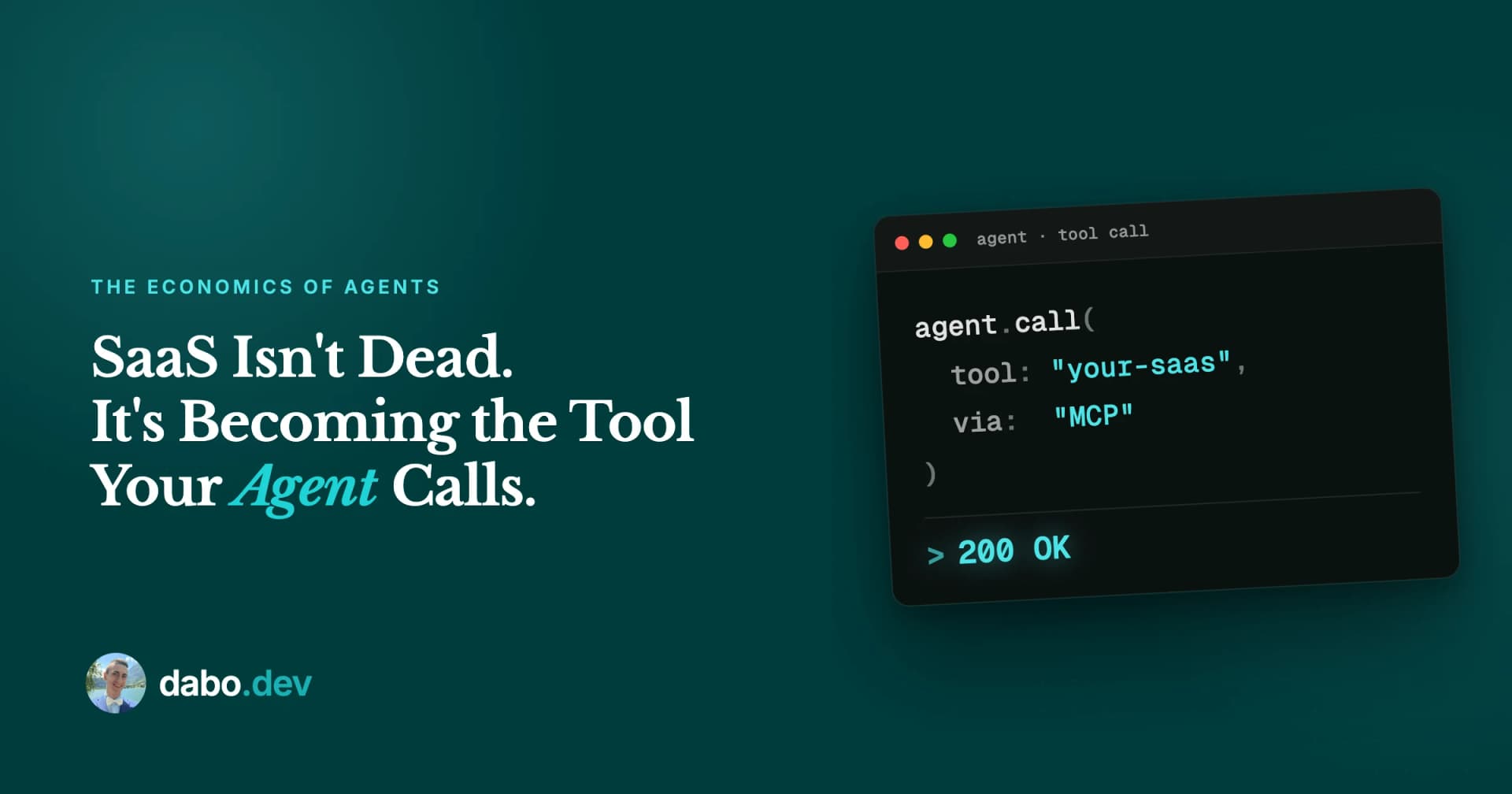
What survives is what I'd call an agentic workflow SaaS. A tool that knows its niche, does the boring steps in code, runs expert prompts at the judgment steps, and exposes the whole thing over MCP so other people's agents can call it. An agent shouldn't reinvent release marketing or cold outreach on every run. It should call the specialist that already figured it out.
And there's one thing your own agent can never build: the view across customers. A SaaS sees what works across its whole customer base. Gojiberry AI, a YC-backed AI SDR that reportedly went from zero to $2.5M+ ARR in under a year, describes it on its YC page:
Every campaign makes Gojiberry smarter. It learns which buyers convert, which signals matter, which messages get replies, and which actions create revenue. Over time, Gojiberry uses what works across similar companies and industries to help every new customer get better results from day one.
Your agent only ever sees you. It learns nothing from other customers.
Distribution changes too. When agents pick the tools, being the MCP tool agents reach for in your niche is the new SEO. And pricing stops being about seats, because the thing logging in isn't a person anymore.
"I'm a dev, I'll just rebuild it"
I get this objection because I'd make it myself. Building got cheap, so why pay for a SaaS when my agent can clone the parts I use? I build internal tools constantly, so I know exactly how tempting this is. Two things stop me.
The build isn't the cost. You'll spend real time and real tokens recreating something a specialist already sells cheap, and then it's yours forever: the maintenance, the edge cases, the API that changes underneath you. AI made writing code cheap. Owning code is still expensive.
And I'm probably not an expert in the thing I'd be rebuilding. A specialist spent years learning what the steps should be and what good output looks like. I'd be guessing at it from the outside. I'd rather put that time into my own product and pay for the expertise where it already exists. Ship faster, get users faster, make money faster.
How I plan to apply it
Every SaaS I build from now on starts agent-first. The boring parts in code. The judgment steps on prompts written from real domain knowledge. An MCP surface early, because I expect agents to become real customers, not an afterthought. And customer data flowing back into the product, so it gets better for everyone using it.
ReleaseRocket, the SaaS my wife and I are building, is the first test. Release announcements split cleanly. Parsing a release, formatting per channel, scheduling, publishing: that's code. The copy and the angle for each product and niche: that's the agent, running prompts tuned for release marketing. The flywheel is in the plan too. ReleaseRocket will see which formats, angles, and channels work per niche across customers, and feed that back so everyone's announcements get better. Once it's live, an agent should be able to call it the moment its human ships something.
So no, SaaS isn't dead. The UI is becoming optional, and the tool call is becoming the product. I'm building that tool for release announcements. Whether agents really show up as customers, I can't know yet. I'm building like they will.